Vector Fins™

Increased onboard
comfort

Increased onboard
safety

Increased boat
value

Less overall fuel
consumption
A game-changer in advanced
yacht stabilization
Vector fins™ is the only top-performing stabilizer system for both cruising and at-anchor use. The fins' unique shape reduces drag and improves fuel efficiency, translating more power into actual roll stabilization.
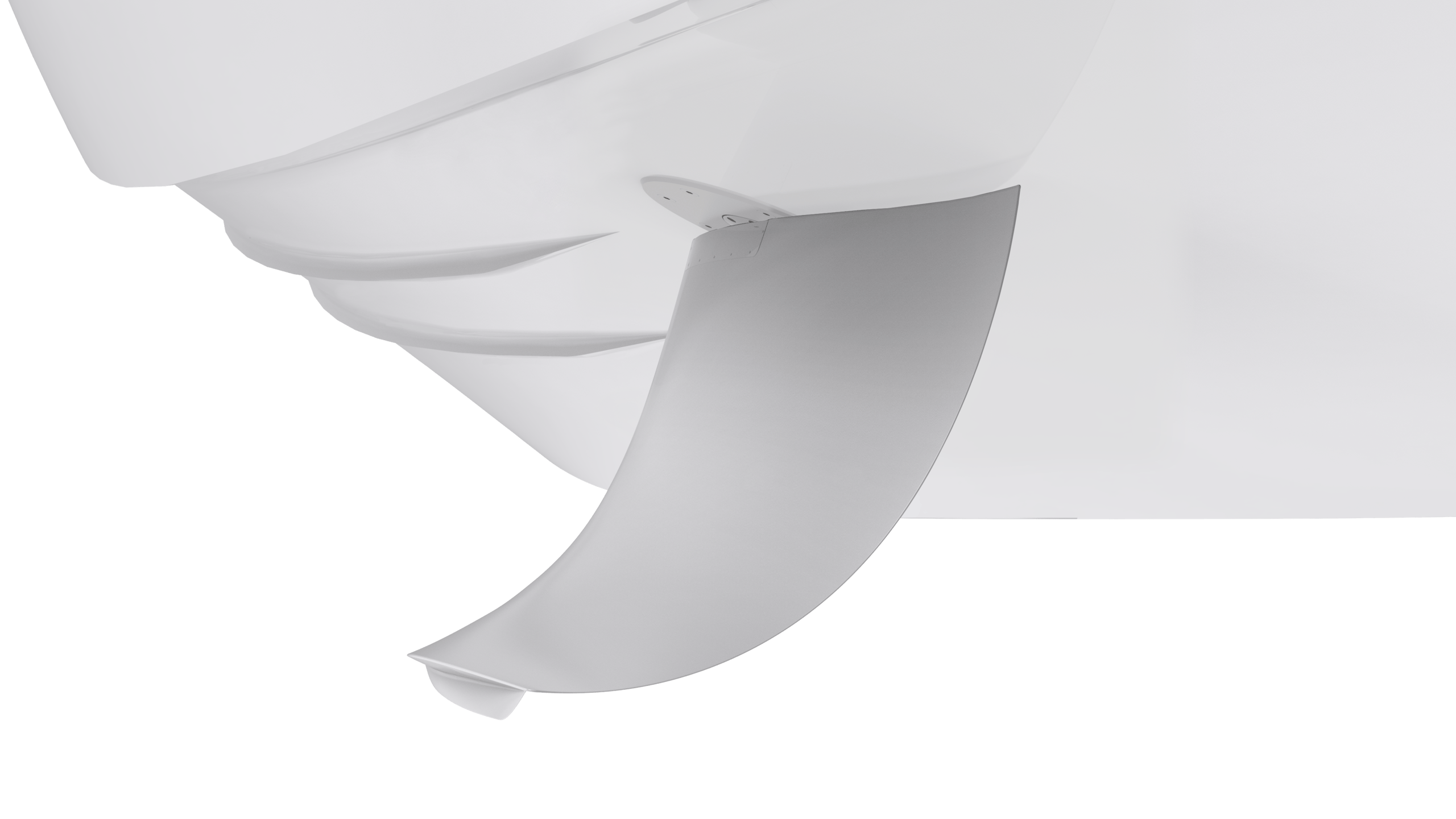
One of the problems with traditional flat fin stabilizers is that on most v-shaped hulls, the force vector applied to stabilize the vessels is too close to the horizontal plane. This means that a lot of the applied energy goes to waste when pushing the hull sideways and impacting yaw.
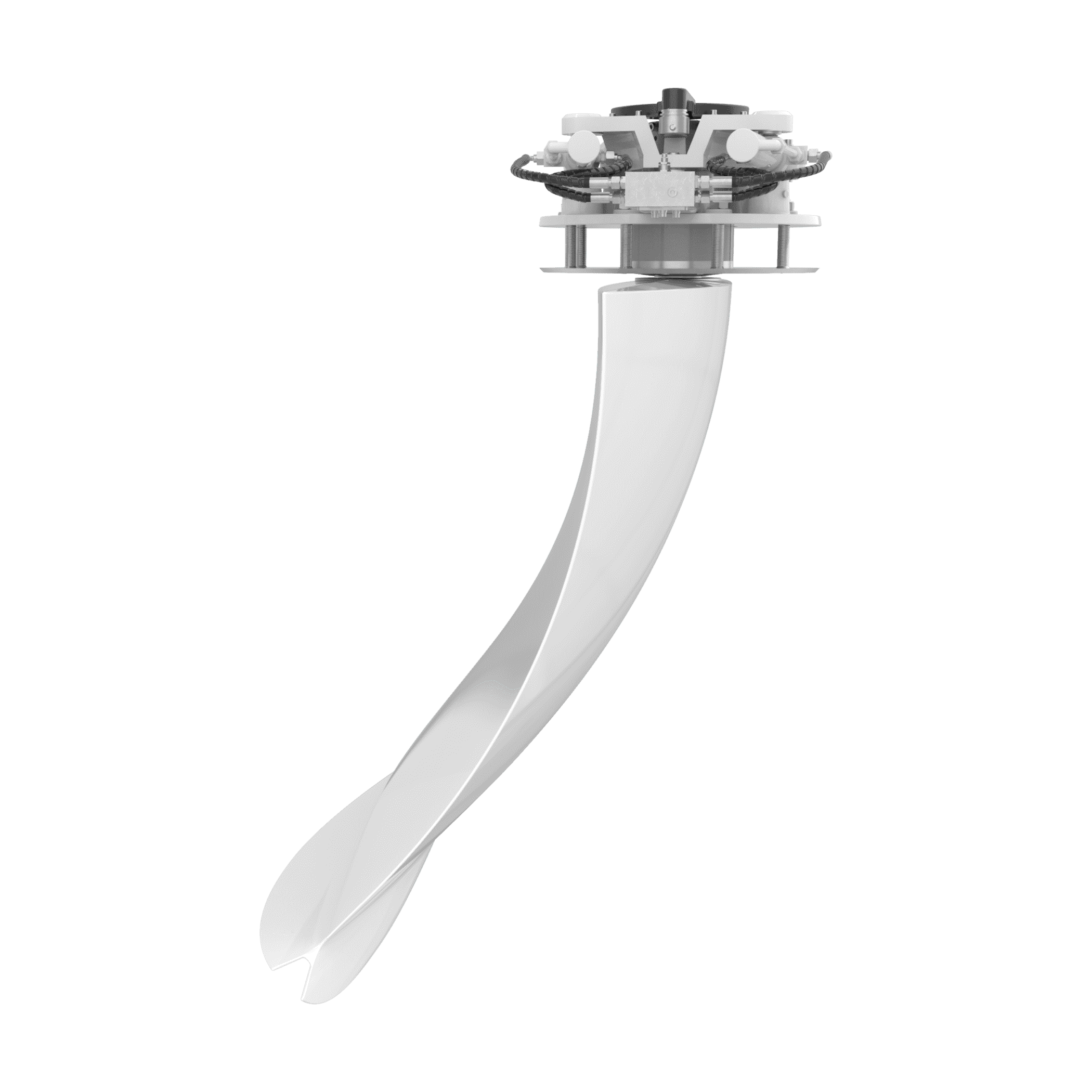
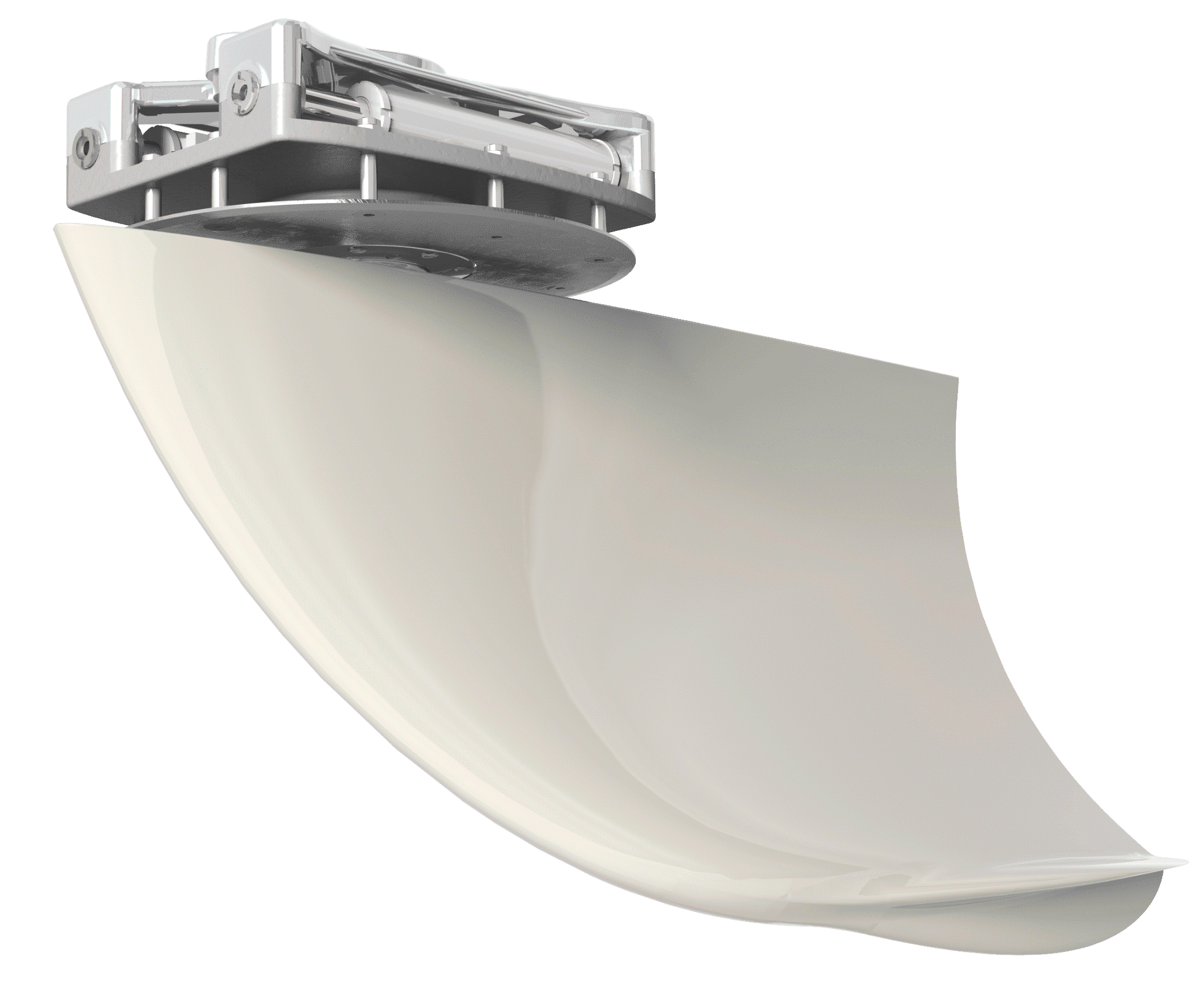
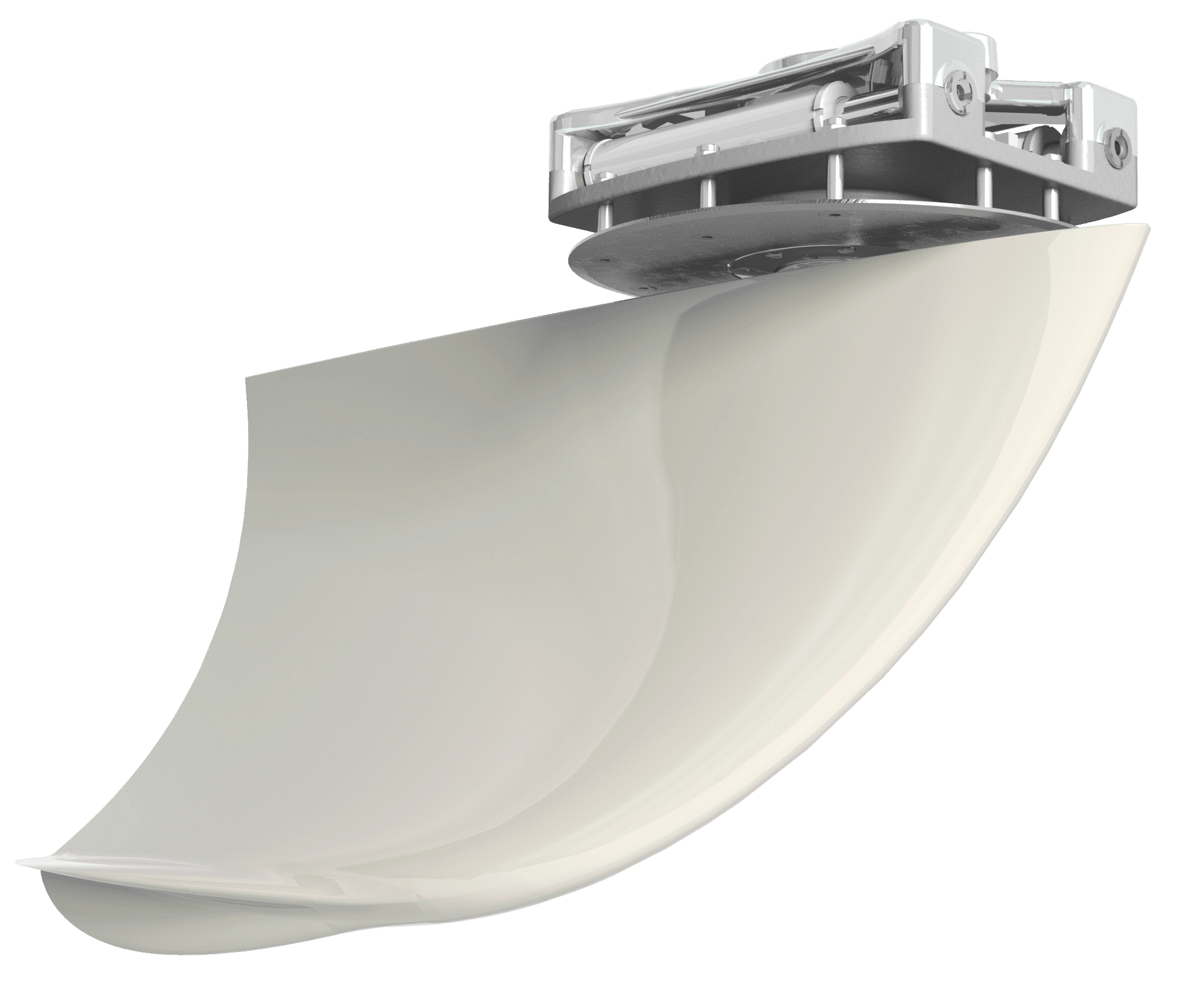
With winglets similar to what is used on modern aircraft, Vector Fins™ adjusts the force vector closer to the vertical plane. This unique design allows using smaller Vector Fins™ compared to larger straight fins to achieve the same results and significantly reduce unwanted side effects such as yaw and sway.
Another significant effect of the curved Vector Fins™ is that they create lift, reducing the hull's overall drag. In some high-speed yachts, the lift has offset the added drag completely, increasing top speed. The hydrodynamic lift generated by a fin is proportional to the square of its speed through the water, so a rise from 17 knots to 24 knots would double the lift from the fins.
It's like riding on
a magic carpet.
- John Maxey, yacht owner
A revolutionary generation of
fin stabilizers
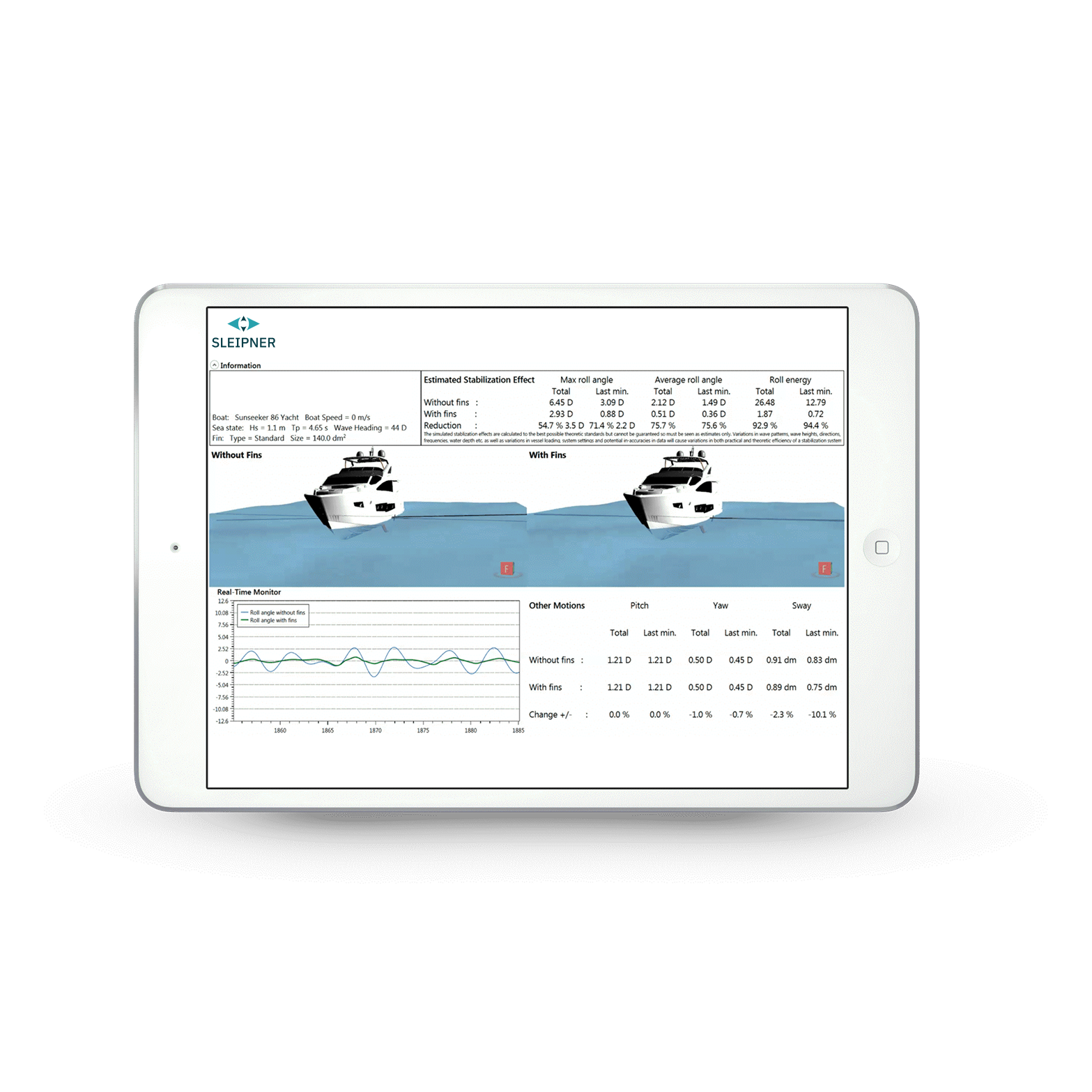
Vector Fins™ can be up to 30 percent more efficient underway and up to 50 percent more efficient at anchor. Undesirable side effects, such as yaw and sway, are reduced by up to 55 percent compared to traditional fin stabilizers.
Learn moreA simple solution to a complex problem
The vertical concave shape redirects the force direction and operates in an up-and-down motion, unlike flat fins that work with forces parallel to the hull angle.
Learn more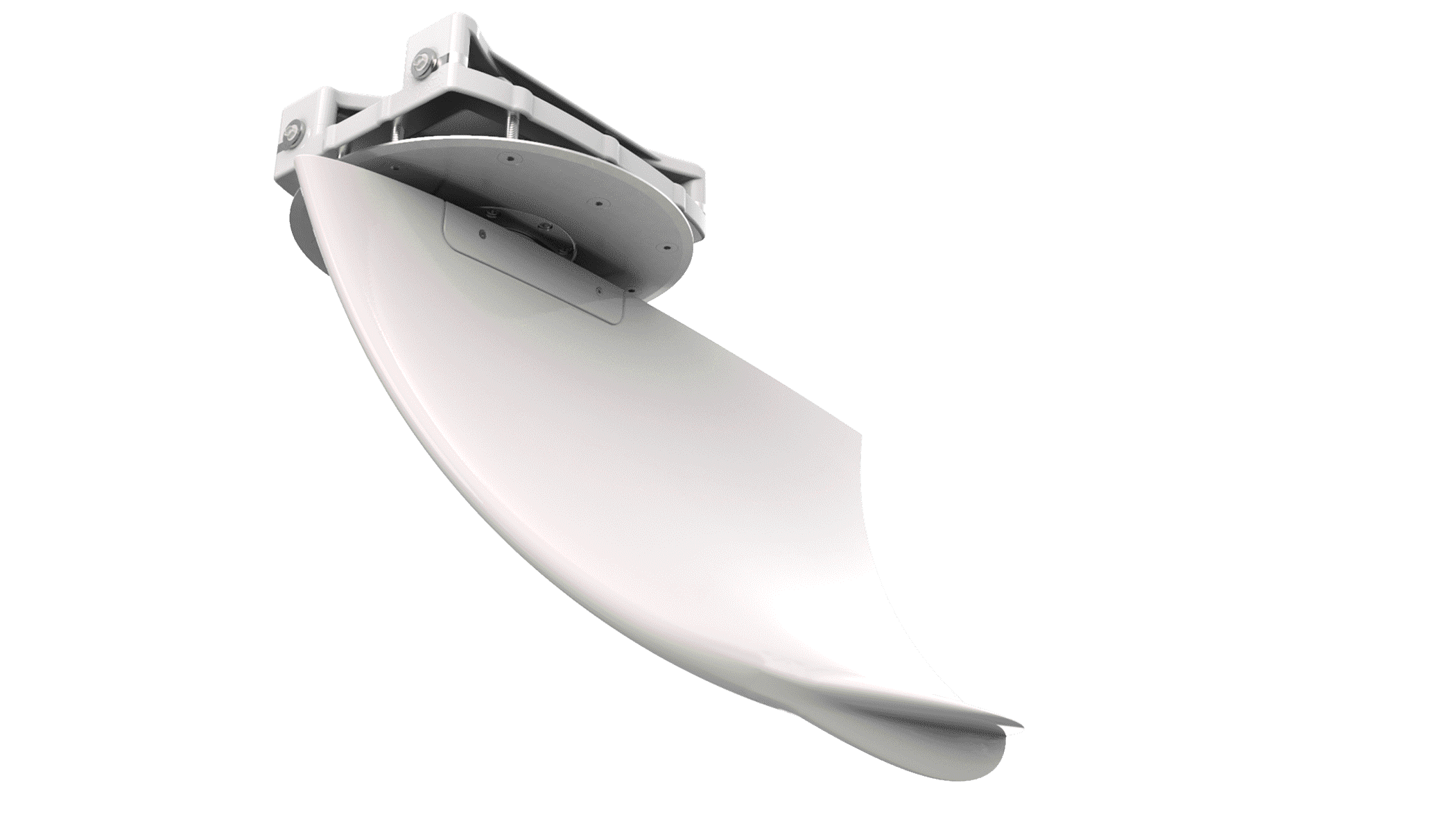
Up to 55% fewer side effects than conventional
stabilizer systems
Up to 30% more efficient underway than flat fins
Underway
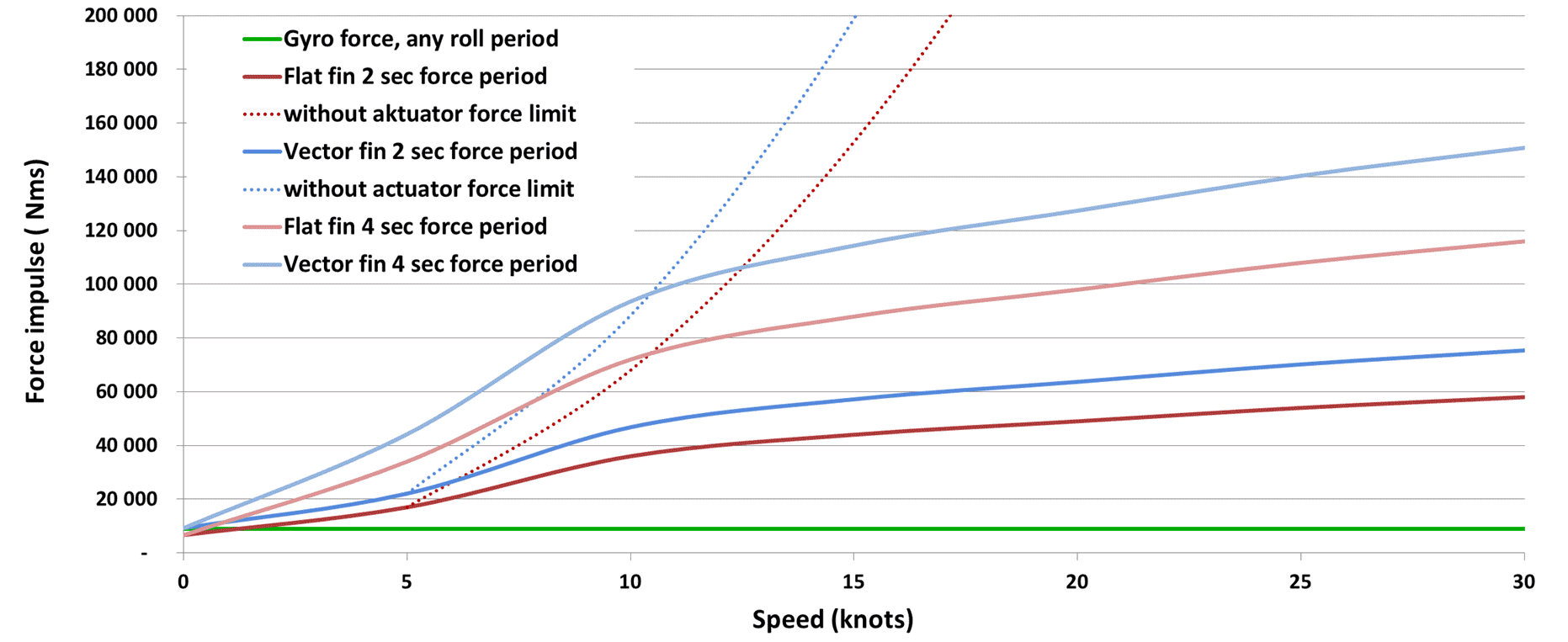
Contrary to gyro stabilizers that lose efficiency while underway, Vector Fins™ increases stabilization force and improves when increasing speed by lifting the vessel higher in the water, reducing its total water displacement.
Standard flat fin stabilizers cannot utilize this potential because they are naturally limited by the excessive water force on the fins, creating drag and preventing the actuator from rotating the fins to higher angles.
During heavy seas, the Vector Fins™ design counter the length of roll periods of standard flat fins. This is a substantial benefit as bigger waves are typically longer. Extensive testing has shown while underway, Vector Fins™ consistently improves roll reduction efficiency by about 30 percent compared to standard flat fins of the same size.
Due to the Vector Fins™ unmatched efficiency, the system can reduce the size of fins required to achieve the same stabilization performance, which in turn reduces drag and side effects.
Up to 50% more efficient at anchor than flat fins
At Anchor
As most boat owners spend more time at anchor than cruising, this is when the stabilizer is needed the most. Vector Fins™ are designed to maximize stabilization at anchor.
The unique shape of Vector Fins™ creates lift forces that are utilized for stabilization at anchor as well, providing up to 50 percent more efficient stabilization than traditional flat fins.
The stabilizer's smart algorithms optimize the fin movements to counter waves, providing a calm and stable platform whether you are dining on board, sleeping or simply enjoying the view.

Verified stabilization test results
Princess 56 with 0.6m Vector Fins™
| Cruising, 11 knots | No stabilizer | Vector fins™ | Reduction of roll | Reduction of seasickness |
|---|---|---|---|---|
| Max roll movement | 10.4° | 0.3° | 97% | 99.8% |
| Average roll movement | 5.7° | 0.15° | 97% | 99.8% |
| At anchor | ||||
| Max roll angle | 9.4° | 2.6° | 72% | 92% |
| Average roll angle | 4.1° | 1.4° | 66% | 88% |
No loss of speed
Vector Fins™ create as much lift as they add drag, resulting in virtually no loss of speed and thereby no added fuel costs.
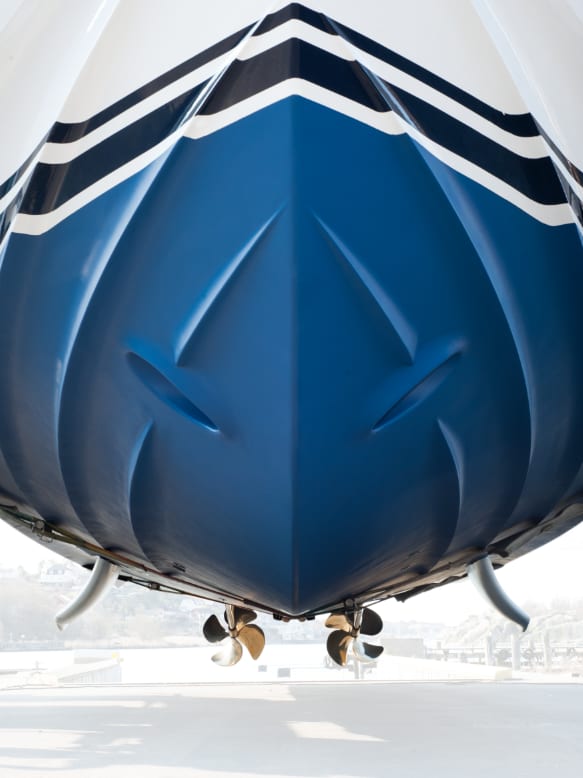
Motorboat & Yachting
Features
- Up to 50 percent more efficient than flat fins
- Up to 55 percent fewer side effects than flat fins
- Advanced hydrodynamic design
- 20-50 percent less resistance than other fins, resulting in virtually no loss of speed, and thereby no added fuel costs
- All Vector Fins™ are prepared for high efficiency in any speed 2:1 size ratio, also at anchor
- Vector Fins™ are formed as a one-shot vacuum injected vinyl ester process over pre-shaped core material using a closed mold method.
- Designed with rowing and mat layers, a technique that ensures maximum strength and minimum weight, the fins can even withstand minor damages without disintegrating.
efficient
effects
Benefits
- Unlike gyro stabilizers, efficiency increases with speed
- Minimal to no increase in fuel consumption
- Minimal to no loss of speed
- Silent all-night operation
- Suitable for retrofit
Research and development
Sleipner continuously invests in making our solutions better. We develop systems designed to integrate with existing and future technology. Many of the products we produce are designed for the large yacht and commercial industry. Still, they have perfect applications on all kinds of vessels.
Floating lab
Our 58 feet test vessel with a top speed of 37 knots, fully loaded with advanced sensors and logging facilities for data collection and analysis.
Controller intelligence
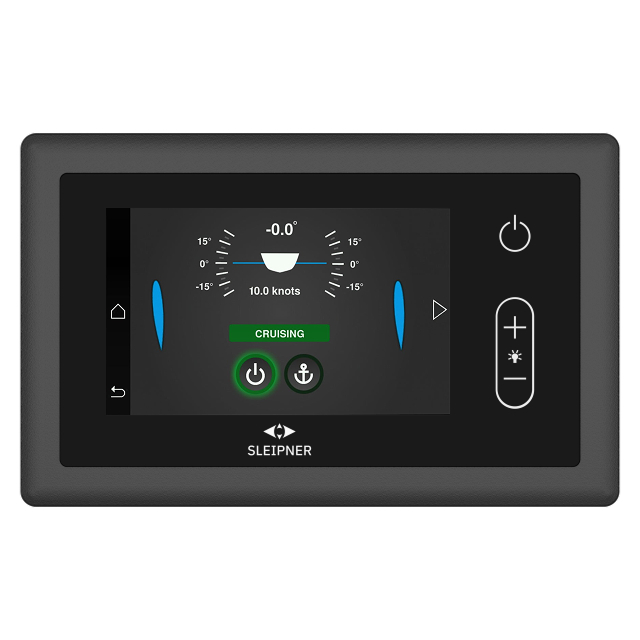
- Continuous development of the best control software possible, cooperating with leading companies in control technologies
- Color touch panel for ease of use and control
- Self-adjusting advanced algorithms and any speed functions for stabilization at anchor
- Easy upgrade of software ensures future compatibility and improvements
- Reverse gear position input but also other sensors to safeguard that fins are centered and locked immediately if the boat is starting to move backward
- GPS speed input (no shaft sensor) helps control algorithms do the best possible job.
- S-Link™ integrates common intelligence with thruster systems and central hydraulics
SPS55 Actuator
The SPS55 actuators for Vector Fins™ are incredibly compact and silent, designed to fit in the small available spaces in modern boats below 70 feet/50 meters where living space is prioritized.
Designed to satisfy the needs of owner-operated vessels with a total focus on reliability and hassle-free operation, these actuators ensure quiet operation suitable for installation below the floor in livings spaces.
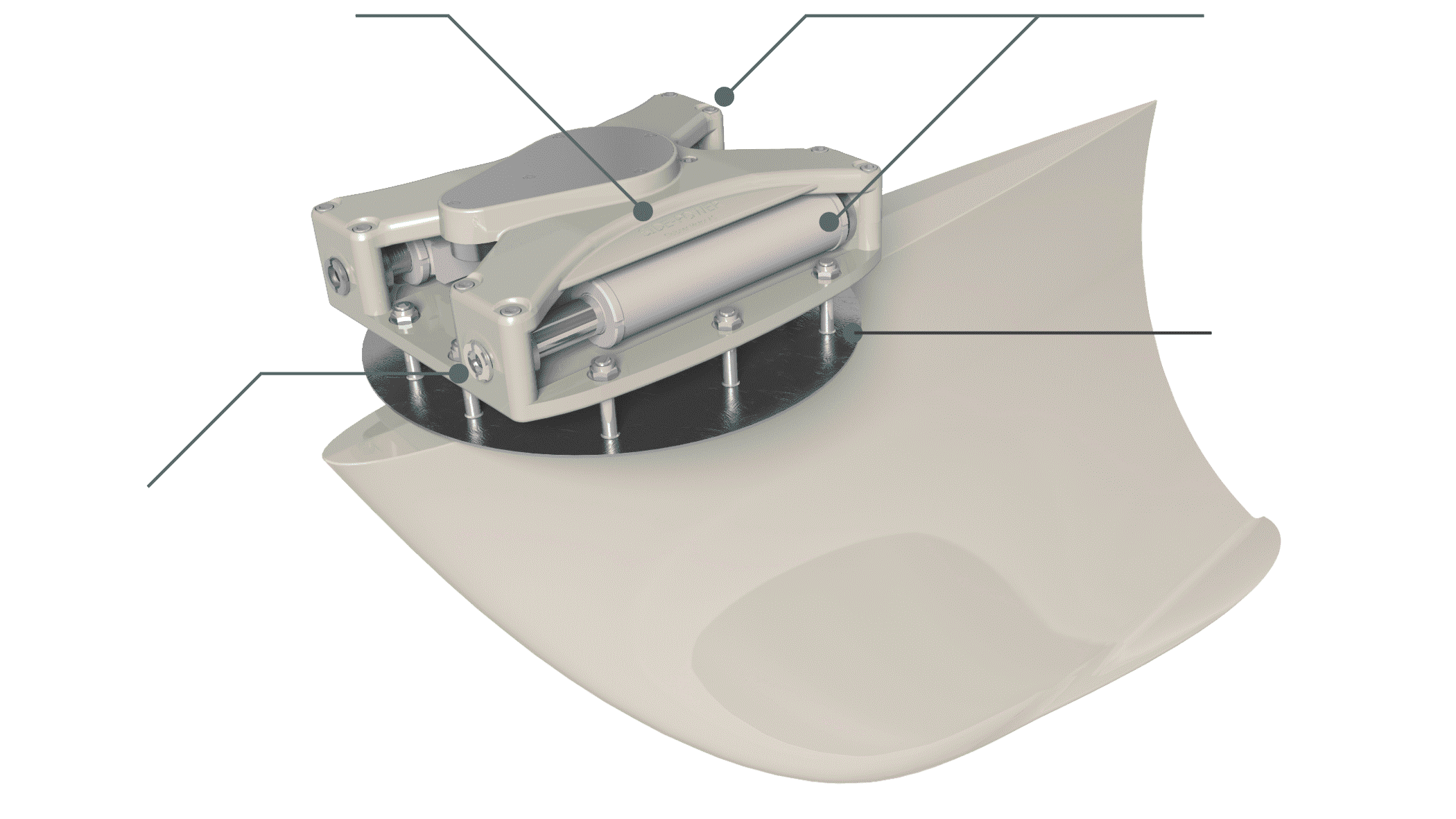 Rack and pinion drive connection
Symmetrically balanced
All external parts in stainless steel
No moving hoses
Rack and pinion drive connection
Symmetrically balanced
All external parts in stainless steel
No moving hoses
- The squared base plate provides a large load distribution area to the hull while still enabling installation in tight spaces between stringers and bulkheads
- Dual, balanced cylinders provide symmetrical load and force
- The actuator can be installed in any direction in the boat. The fin angle is independent of the actuator
- No moving hoses secure against leakages and potential wear, as well as simplifying installation
- Oversized bearings for lifetime operation with only a minimal level of maintenance
- Rack and pinion drive connection for quiet, reliable, long-life operation, with easy service when needed after thousands of operational hours
- Vector Fins™ are conveniently mounted/removed from the outside of the hull, convenient for transport or other haul-out situations where this might be needed
- Defined shaft-shear point in case accidentally hitting something
SPS66 / SPS92 / SPS93 Actuators
Utilizing the space available effectively in larger boats is often a key factor when installing a stabilizer system. Our larger range actuators are 25-75 percent lower in height than standard models on the market.
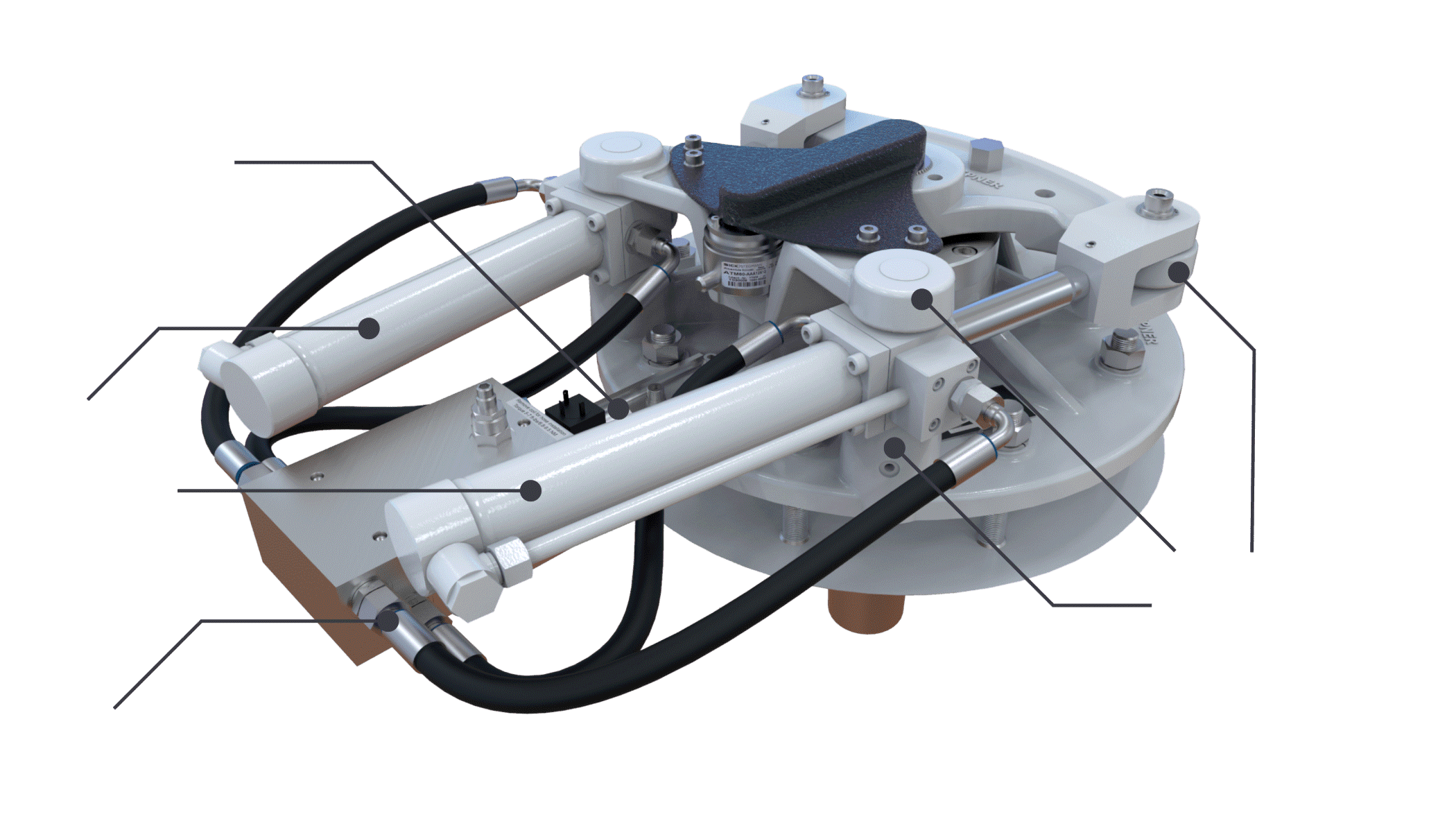 Non-moving attachment points for hydraulic hoses
Dual hydraulic cylinder setup for symmetrical loads
All moving hydraulic connections are pre-fitted
Lifetime lubricated high-end bearings, no need to grease bearings periodically
Non-moving attachment points for hydraulic hoses
Dual hydraulic cylinder setup for symmetrical loads
All moving hydraulic connections are pre-fitted
Lifetime lubricated high-end bearings, no need to grease bearings periodically
- Constructed for easy installation and minimal noise reproduction
- Precision machining and assembly secures a long lifetime and durability
- No additional center lock. This is automatic in the standard hydraulic system - very safe due to the hydraulics having extreme safety limits
- Dual balanced cylinders provide symmetrical load and force:
- Purpose-designed dual shaft sealing, superior to standard simmer ring lip seals.
- No complex adjustments are required to set up controller with lots of factors. These are set automatically on the first sea trial of the boat
- Defined shaft-shear point in case of the fins accidentally hitting something
- Lifetime lubricated high-end bearings as standard, saving time and money for the owner. Most stabilizer systems require you to periodically service their bearings, meaning either a part change, lubrication, and/or mechanical adjustments
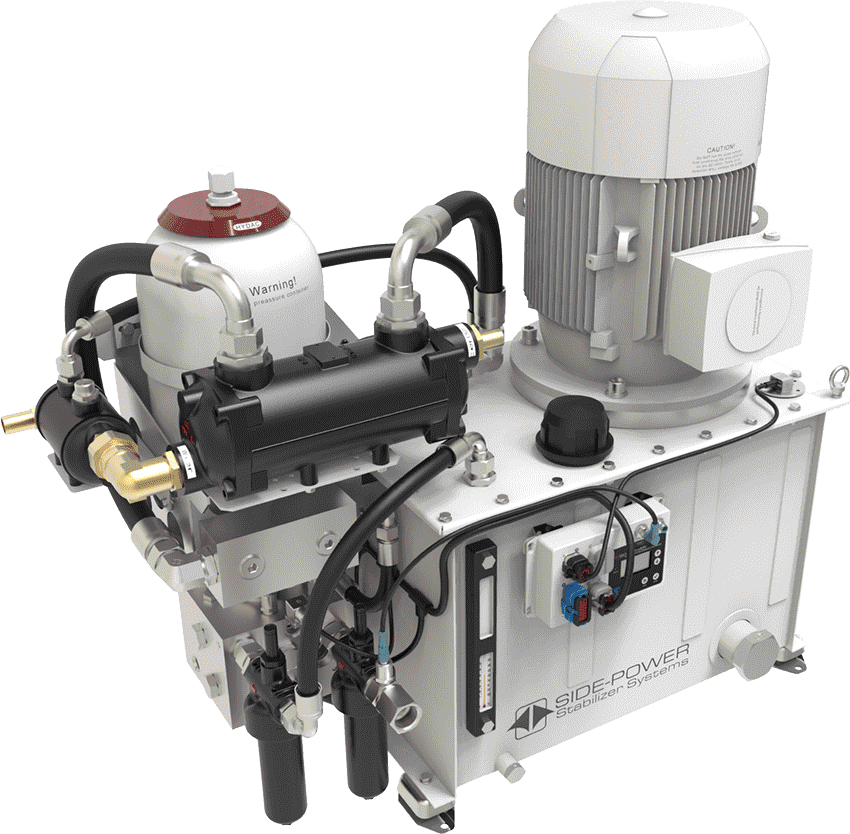
Standalone hydraulic power pack
The compact power packs can run the stabilizers from the generator power at all times. You can also use the stabilizers underway with the generator shut down by adding an optional load sense pump.
Compact, quiet and easy to install
This is a complete hydraulic power unit (HPU) for installations where the vessel does not have a hydraulic thruster system. All of the hose and wire connections are pre-installed, allowing for faster system install and startup in the field. All connections are focused on two sides of the tank, allowing installation in confined spaces.
Sleipner offers similar pre-connected and easy-to-install central hydraulic systems when other hydraulic consumers, typically thrusters, are required. These have an equivalent level of integration while, of course, being a bit larger due to the higher capacities required by thruster systems. When combined with a hydraulic thruster system, the stabilizers and thrusters communicate via an S-Link™ CAN-bus system, enabling automatic power distribution to where it is needed at the time and stabilizer control from the inexpensive thruster control panels.